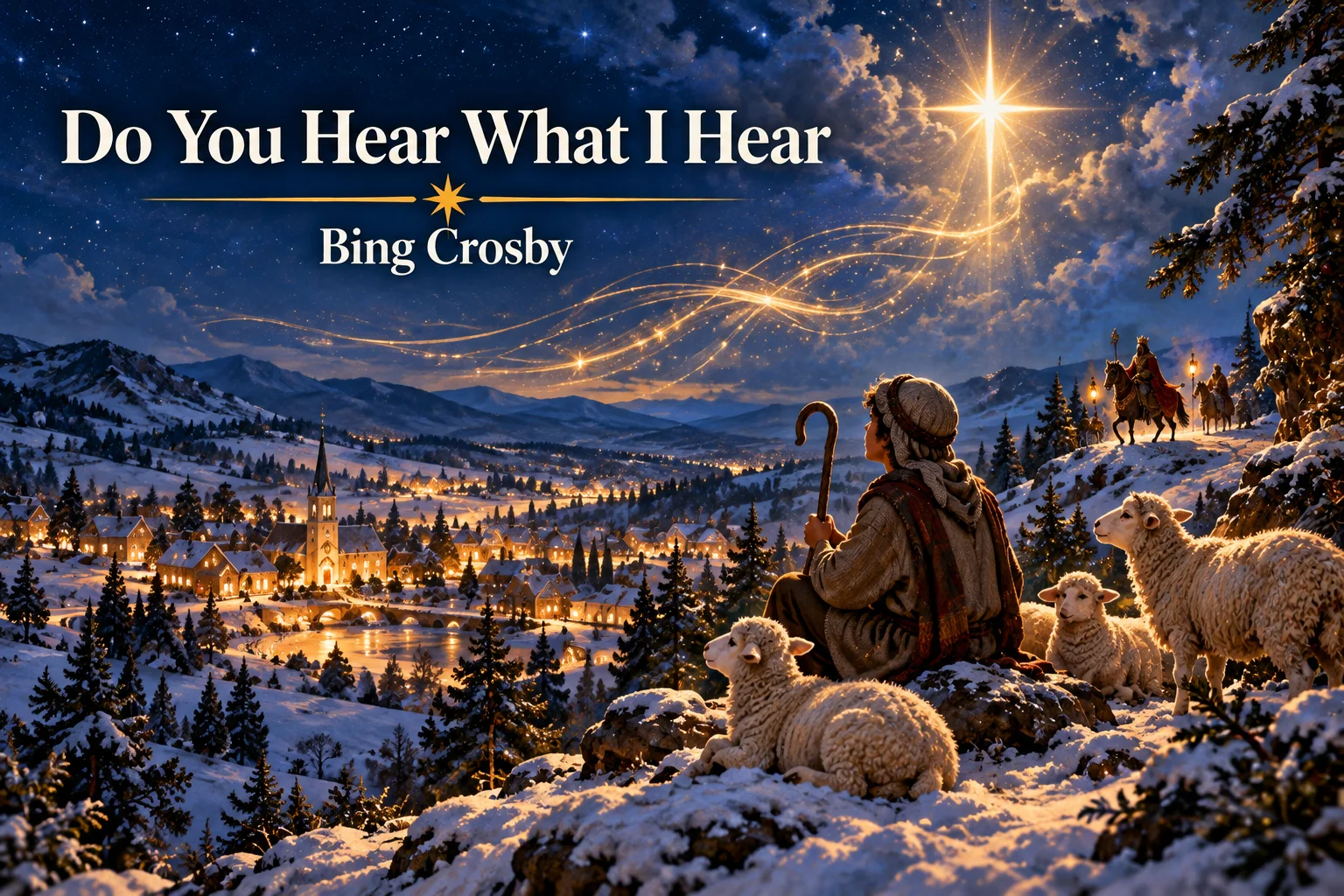
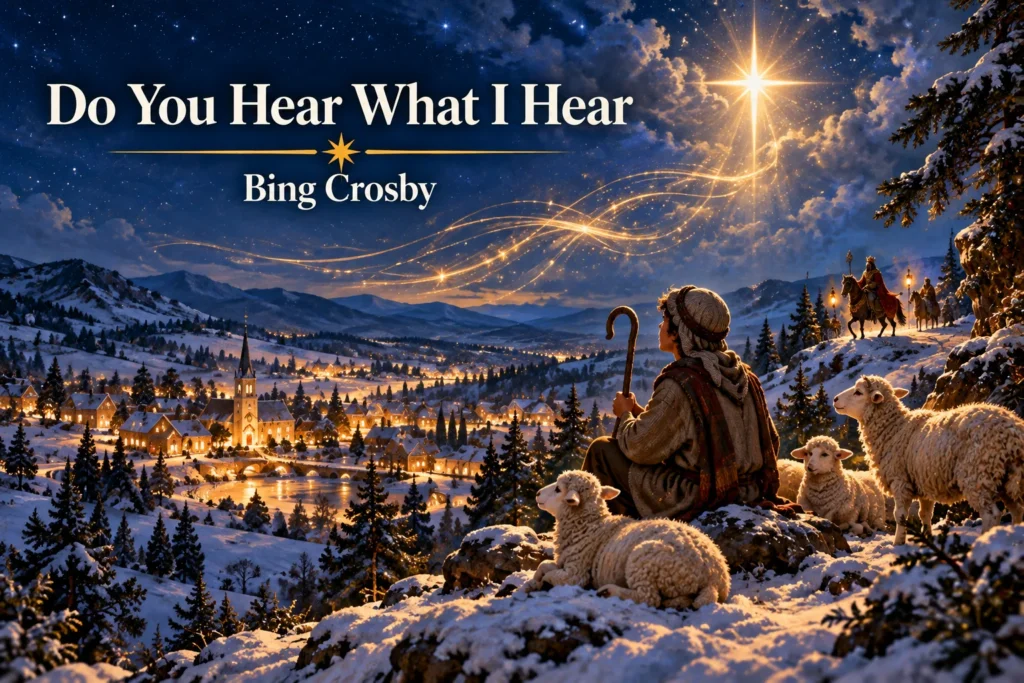
Do You Hear What I Hear
Do you hear what I hear?
Said the night wind to the little lamb
Do you see what I see?
(Do you see what I see?)
Way up in the sky, little lamb
Do you see what I see?
(Do you see what I see?)
A star, a star, dancing in the night
With a tail as big as a kite
With a tail as big as a kite
Said the little lamb to the shepherd boy
Do you hear what I hear?
(Do you hear what I hear?)
Ringing through the sky, shepherd boy
Do you hear what I hear?
(Do you hear what I hear?)
A song, a song high above the trees
With a voice as big as the sea
With a voice as big as the sea
Said the shepherd boy to the mighty king
Do you know what I know? (Do you know what I know?)
In your palace warm, mighty king
Do you know what I know? (Do you know what I know?)
A Child, a Child shivers in the cold
Let us bring him silver and gold
Let us bring him silver and gold
Said the king to the people everywhere
Listen to what I say! (Listen to what I say!)
Pray for peace, people, everywhere
Listen to what I say! (Listen to what I say!)
The Child, the Child sleeping in the night
He will bring us goodness and light
He will bring us goodness and light
Listen to the song
Hør sangen

About the carol Do You Hear What I Hear
“Do You Hear What I Hear?” is a Christmas song written in 1962 by Noël Regney and Gloria Shayne. The song was created during the Cuban Missile Crisis, a period of intense international tension, and its message carries themes of peace and hope alongside its Christmas imagery. Bing Crosby recorded one of the early well-known versions, helping the song become part of the wider Christmas repertoire.
The lyrics are structured as a sequence of questions and responses between different figures, beginning with the night wind and a little lamb before moving toward a king. The narrative eventually points toward the birth of a child and a message of peace. This structure gives the song a storytelling quality while connecting natural imagery, the Nativity and a plea for peace.
Bing Crosby’s recording helped establish the song as a recognizable Christmas standard. Its connection to Christmas comes from its references to the Christ child and the message of peace associated with his birth. At the same time, the circumstances surrounding its creation give the song an additional historical dimension, making its call for peace especially significant within the Christmas season.